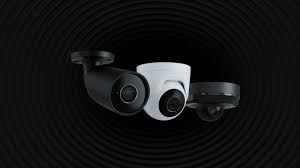
The biggest practical problem with most security camera systems isn’t image quality or coverage — it’s the notifications. A system that sends you an alert every time a bird flies past, a shadow moves across the driveway, or headlights sweep across the front fence is a system you train yourself to ignore. And a system you ignore doesn’t protect you.
AI-based motion detection addresses this problem directly by changing what the camera pays attention to. Instead of triggering on any pixel change in the frame, the camera analyses the shape and movement pattern of whatever triggered the detection and classifies it before sending an alert.
What AI Detection Actually Does
The classification happens on the camera itself or on the NVR, depending on the system. The camera’s processing chip runs an inference model trained on thousands of images of people, vehicles, and animals. When motion is detected, the system asks: does this match the profile of a person? A vehicle? Something else? If it doesn’t match a category that you’ve configured to notify you about, no notification is sent.
For a Brisbane home, this means you receive alerts when a person approaches your front door or enters your driveway — and not when the neighbour’s cat cuts across your lawn, when a car’s headlights hit your garage wall, or when a tree branch moves in the wind. The false alarm rate on a well-configured AI detection system is a fraction of what you get with standard motion detection, which makes each alert you do receive worth paying attention to.
Line Crossing and Zone Detection
Beyond basic person/vehicle classification, most commercial-grade AI cameras support configurable detection zones. You can define exactly which area of the camera’s view should trigger a notification — the driveway but not the footpath, the back gate but not the garden — and set rules like “alert only if a person enters this zone and remains for more than 3 seconds.” This level of precision dramatically reduces nuisance alerts from people passing on the street or delivery drivers who don’t come through the gate.
Directional detection is also available on some cameras — you can configure an alert only if someone is moving toward the building rather than away from it, which further refines what’s worth a notification versus what isn’t.
Evidence Quality and Search
AI detection also changes how useful recorded footage is after the fact. On a traditional motion-recorded system, reviewing footage means scrubbing through hours of recording looking for relevant events. On an AI-classified system, you can search the NVR for “all person detections at the rear gate between 11pm and 6am” and get a clip list in seconds. For investigators and insurers, this is significantly more useful than raw continuous recording.
The classification metadata is stored alongside the footage, so even if you’re reviewing recordings weeks later, the search still works. For properties with multiple cameras and high event volumes, this makes the difference between footage that’s practically usable and footage that technically exists.
Active Deterrence: When Detection Triggers a Response
Some cameras combine AI detection with active deterrence features — a built-in speaker and white light that activates when a person is detected. When someone enters a defined zone after dark, the camera can play a recorded warning, trigger a siren tone, and flood the area with light — automatically, without you having to be watching a live feed. This gives the detection capability a response function, not just a recording function.
We configure active deterrence selectively — it’s appropriate for some locations (rear yards, driveways after hours) and not others (front gates where delivery drivers trigger it at 7am). Done right, it’s a meaningful deterrent. Done wrong, it’s a nuisance that the household starts disabling.
Find Out What’s Right for Your Property
AI detection is now standard on the camera systems we install rather than a premium add-on. Jarrod covers Brisbane, the Gold Coast, and the Sunshine Coast — call 0490 130 339 to book a free site assessment, or get in touch through the contact form.